


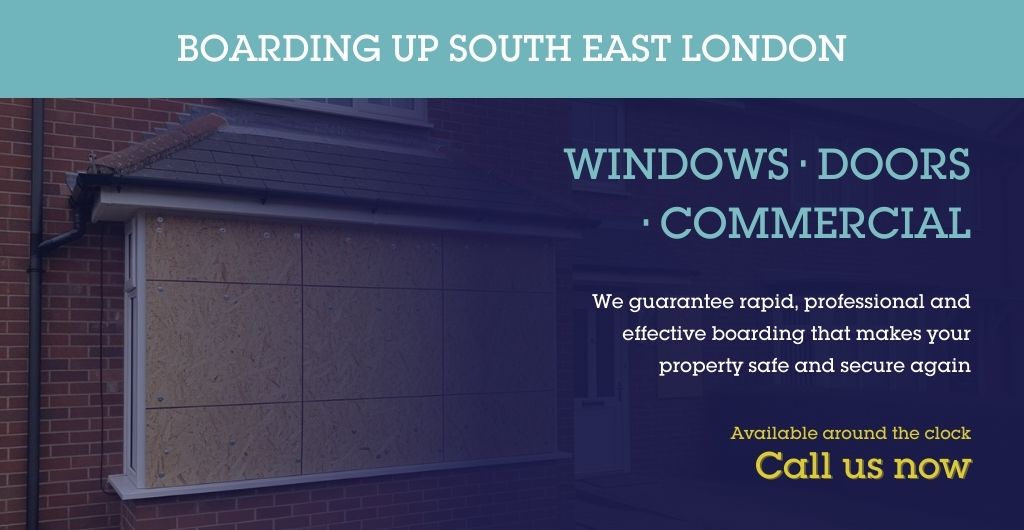
Insurance Support for Boarding Up in South East London
Insurance support for boarding up in South East London is often needed after a burglary, vandalism, storm or accident, when you must secure the property quickly and keep your insurer happy. We help you board up and secure your home or business promptly and provide clear, insurance-ready paperwork so your claim can move forward smoothly.
Need urgent help? Call 020 4538 1506 now – we can usually attend the same day or out of hours anywhere across the SE postcodes.
When You Need Insurance Support for Boarding Up
You’ll typically need insurance support for emergency boarding up when:
- A break‑in or attempted burglary has left your door or window damaged.
- A shop window is smashed or your shopfront has been ram‑raided or vandalised.
- Storm damage has blown out glass, damaged roof lights or compromised doors.
- Accidental breakage – such as a ball, ladder or vehicle impact – has shattered glazing.
- A fire or flood has made part of the property unsafe and you must secure an empty property temporarily.
In these situations, most insurers expect you to:
- Make the property safe – remove hazards like loose glass.
- Prevent further damage or loss – for example, by temporary boarding up to stop rain, theft or trespass.
- Keep records – including photos, invoices and any police reference number.
We provide exactly the kind of emergency securing in South East London insurers are looking for: professional, well‑documented and clearly itemised.
For more on specific situations, you may find it helpful to read about:
- Post‑burglary boarding up in South East London
- Vandalism repair and smashed window boarding
- Storm damage boarding and temporary weatherproofing
How We Secure Your Property (Insurer-Friendly Method)
Our job is to board up and secure your property quickly, using non‑destructive methods wherever possible, and leave a clear paper trail for your insurer.
1. On‑site assessment and photos
On arrival, our DBS‑checked technicians will:
- Make a quick safety assessment – checking for loose glass, structural concerns, electrics near water, etc.
- Take time‑stamped photos of the damage from several angles before any work starts.
- Confirm what your insurer has asked for, if you’ve already spoken to them (for example, specific materials or a temporary steel door).
We always recommend you:
- Note any police reference number if the incident involved a crime (burglary, vandalism, vehicle impact, etc.).
- Keep reference numbers and insurer claim IDs handy – they will be needed later.
2. Non‑destructive securing wherever possible
We follow a non‑destructive securing approach as standard, which means:
- Using existing frames and structures wherever they are sound.
- Avoiding damage to bricks, frames or fittings unless there is no safe alternative.
- Only drilling or fixing into new points when structurally necessary (for example, where the frame has failed).
The rare exceptions are where:
- The frame or structure is so damaged that it cannot safely support boarding.
- There is a serious security risk if we don’t fix into stronger points (for example, after a heavy impact).
- Fire or flood has weakened parts of the building and we must adapt the method to keep people safe.
We explain any such exceptions clearly on the day and in your work statement for the insurer.
3. Professional materials and fixings
We use robust, insurance‑friendly materials suitable for temporary boarding up in South East London, including:
- Exterior‑grade plywood or OSB boarding – typically 11–18 mm thick depending on risk, size and height.
- Anti‑tamper fixings – screws/bolts designed so they cannot be easily removed from outside, increasing security.
- Timber framing or bracing where needed for larger openings, damaged frames or high‑risk commercial sites.
- Optional temporary steel doors or steel security screens for longer‑term or high‑risk vacant properties.
Where appropriate, we can also coordinate with your chosen glazier or builder for follow‑on works (for example, board today, reglaze later). Many clients combine our work with later window boarding and glazing; you can learn more about this on our dedicated page for window boarding in South East London.
4. Keeping weather and people out
Depending on the incident, we may need to balance security, weatherproofing and ventilation:
- For storms and accidental breakage, we focus on temporary weatherproofing – overlapping boards, sealing gaps and shielding exposed areas where practical.
- After fire or flood, insurers sometimes ask for areas to remain partially ventilated; we can still secure empty properties using a combination of boarding, screens and temporary doors.
If you have questions about specific materials (plywood vs OSB, thickness, steel screens), we’ll explain options on site in clear, non‑technical language so you can make an informed decision.
What Paperwork We Provide for Your Insurance Claim
We’re not loss adjusters or legal advisers, but with over 10 years’ experience providing emergency boarding up across South East London, we know what insurers typically want to see.
After the work, we can provide:
- Time‑stamped photos (before and after boarding) – usually taken on smartphones or tablets.
- A clear, itemised invoice, which can include:
- Date and time of attendance
- Property address
- Description of incident (for example, “smashed shopfront window after attempted burglary”, using your words)
- Number and size of openings boarded
- Materials used (for example, 18 mm exterior‑grade plywood; anti‑tamper fixings)
- Labour and materials broken out where appropriate
- A brief work statement summarising:
- What we found on arrival
- Immediate risks (broken glass, unsecured access, weather exposure)
- Actions taken to secure and board up the property
- Any safety or structural notes you may need to pass on to other contractors
You should:
- Keep your police reference number safe if the incident involved a crime – insurers often ask for it.
- Keep any emails, texts or call logs from your insurer agreeing to emergency works.
- Take your own photos too, if safe, to add to the claim record.
If you’re still in the “what do I do now?” stage, our general boarding up FAQs may help you understand the process step‑by‑step.
Why Choose Us for Insurance-Related Boarding Up?
Local, experienced and fully insured
- We’re a local boarding up service covering all SE postcodes, including areas such as Greenwich, Lewisham, Camberwell, Peckham, Woolwich and Thamesmead.
- Over 10 years’ experience providing emergency boarding up in South East London for homes, shops and commercial sites.
- Public liability insured and all technicians are DBS‑checked, giving reassurance to homeowners, tenants and commercial clients alike.
Familiar with insurers’ expectations
Our team deals with insurance‑related emergencies every week, including:
- Post‑burglary boarding up for houses and flats.
- Commercial boarding up for shops on high streets and retail parks.
- Vacant property boarding for landlords, estate agents and property managers.
We understand the need for:
- Clear, insurance‑ready paperwork.
- Proper temporary security that prevents further loss or damage.
- Tidy, respectful work – particularly important after a stressful incident like a break‑in or fire.
Non-destructive and tidy work
- Our aim is always non‑destructive securing, protecting your frames, brickwork and finishes where possible.
- We tidy up broken glass and debris in the immediate work area, so you’re not left with a hazard after we leave.
- Openings are neatly boarded to look professional – which matters both for security and for neighbours, customers or staff.
If you manage multiple properties, our approach also fits well with facilities management boarding and landlord requirements; see more on our commercial boarding up in South East London.
What Happens Next: Simple Claim-Friendly Process
Whether you’ve already spoken to your insurer or not, the process is straightforward.
-
Contact us
- Call us 24/7 on 020 4538 1506 for emergency boarding up.
- Or send an email with photos and your location to [email protected].
- If you prefer, you can also contact our South East London team via our simple enquiry form.
-
We attend and secure the property
We’ll:
- Assess the damage and any safety issues.
- Take photos before, during and after the work.
- Secure all relevant openings using plywood boarding, OSB boarding, anti‑tamper fixings and, where needed, temporary steel doors or screens.
- Work as non‑destructively as the situation allows.
If your situation is particularly urgent or complex, our dedicated page for 24/7 emergency boarding up in South East London explains what to expect.
-
You receive insurer-ready documentation
After the job, we provide:
- An itemised invoice with date, time, materials and labour.
- A brief work statement which you can forward directly to your insurer.
- Access to time‑stamped photos, either shared digitally or by email on request.
-
You progress your claim
You send the insurer:
- Our invoice and work statement.
- Our photos (and yours, if you took some).
- Your police reference number (if applicable) and claim number.
If your insurer or loss adjuster has specific questions about the boarding up work, they can contact us directly – we’re happy to clarify what was done and why.
For more detail on the boarding up work itself, you can see our overview of boarding up services in South East London or explore by property type.
FAQs: Insurance & Boarding Up in South East London
Is boarding up covered by insurance?
In many burglary, vandalism, storm or accidental damage claims, insurers do cover emergency boarding up as a necessary step to prevent further loss or damage.
However, every policy is different, so we always advise you to check:
- Your policy wording (sections on “emergency repairs” or “making safe”).
- Whether you need pre‑authorisation from your insurer before instructing us.
We can still attend urgently if you haven’t spoken to them yet; you can then pass our invoice and photos to your insurer afterwards.
What information do you need from me for insurance paperwork?
Ideally:
- Your full name, contact details and property address.
- (If available) Your insurance claim number and insurer’s name.
- (If applicable) Your police reference number.
- A brief description of what happened – for example, “shop window smashed by vandalism” or “back door kicked in during burglary”.
We’ll then reflect this in the invoice description and work statement, which makes things easier for claims handlers.
Can you deal directly with my insurer or loss adjuster?
We’re happy to:
- Provide extra detail about the work in writing if your insurer requests it.
- Speak briefly with a loss adjuster or claims handler to clarify technical points about the boarding up.
We don’t act as loss adjusters or legal advisers, and we don’t decide what will and won’t be paid out; that rests with your insurer. What we can do is provide clear, factual documentation of what we found and what we did.
What if my insurer wants a specific material or solution?
Some insurers or property managers request:
- Particular thicknesses of plywood or OSB.
- Use of steel security screens or temporary steel doors on high‑risk or vacant properties.
- Boarding in certain areas only, to allow ventilation after fire or flood.
If you have written instructions from your insurer, please share them with us. We’ll follow them wherever safely possible and record this in our work statement, so your insurer can see we’ve complied.
How long will the boarding up stay in place for my claim?
Boarding up is a temporary security measure, but it can safely remain in place for weeks or longer while claims and permanent repairs are arranged, particularly on vacant or void properties.
We usually recommend:
- Discussing with your insurer when permanent repairs or replacements will be authorised.
- Letting them know if the boarding may need to remain for an extended period, particularly for vacant property boarding – see our page on vacant property security in South East London for more detail.
Need help now? Call 020 4538 1506 or Email us for fast, insurer‑friendly emergency boarding up and clear documentation for your claim.
Helpful links
